How to make learning fun during half term without worksheets
Academiq Maestro
·Oct 10, 2026
·6 min read

Half-term gives children a break from their usual routine. If you want to keep their curiosity going, you can start with something they already enjoy: a football score, a story, a recipe or a puzzle they get to set for you.
These half-term learning activities need no printed worksheets. Pick one, spend a few minutes on it and stop while it is still enjoyable. The aim is to give your child something interesting to think about together, with room to explain, guess and change their mind.
Let your child set the questions
Swap roles and ask your child to create a challenge for you. They choose the topic, work out an answer and decide what clues you are allowed. A favourite animal, game or sport is a good starting point.
For younger children, try “I am thinking of a number between 1 and 10”. You ask questions they can answer with yes or no. Older primary children can invent a number riddle such as “My number is a multiple of 4, greater than 10 and less than 20”. Ask whether there is more than one possible answer: 12 and 16 both fit, so they need another clue.
Teenagers can set a two-step problem or a short quiz on a topic they know well. Ask them to explain how they would check an answer, rather than only announcing whether you got it right.
Make a maths choice with something real
Give your child a decision with two possible answers. For younger children, share six objects between two toy characters and ask whether the shares are equal. For older primary pupils, compare a pack of four items costing £3 with a pack of six costing £4.20: which gives the lower price per item? The first costs 75p per item; the second costs 70p.
For teenagers, compare two discounts on a £40 item: £8 off or 15% off. Ask them to calculate the final prices and explain their choice. The prices are £32 and £34, so £8 off saves more. You can change the starting price and investigate when the better offer changes.
Build a story from three ordinary objects
Choose three things from around the house, such as a spoon, a key and a sock. Your child makes up a story that uses all three. You can tell it aloud, act it out or write it down; choose the version they enjoy.
Younger children might invent a character and one surprising event. Older primary children can add a problem and an ending that solves it. For teenagers, try telling the same scene from two characters’ viewpoints, with a different detail noticed by each.
Join in with a question that helps the story grow: “Why did the character hide the key?” or “What would happen if the other person found out?” If your child wants to write, agree on a small goal such as a strong opening paragraph.
Become an estimate detective
Before measuring or counting, make a prediction. How many spoonfuls fill a cup? How long will it take to walk to the next corner? How many pages could you read in ten minutes? Then check and talk about what made your estimate reasonable.
Younger children can compare more and fewer. Older primary children can estimate a quantity and work out the difference between their guess and the result. Teenagers can try two measurements, consider why they differ and decide what would make their next estimate better.
A wrong guess gives you something to investigate. Ask “What would you change next time?” and let your child revise their idea.
Change the size of a recipe
Choose a recipe you would actually like to make. Younger children can count ingredients or help compare full and half-full measures. Older primary pupils can work out how much is needed for twice as many portions.
For a teenager, try a recipe that serves four and adapt the quantities for six. Each ingredient needs multiplying by 1.5: 200g becomes 300g, for example. Talk about ingredients that are awkward to divide and how a cook might handle them. Adults should handle hot equipment and any steps that need supervision.
Keep it enjoyable for different ages
Let siblings share a topic without requiring the same task. One child might count objects, another compare quantities and an older child calculate a percentage. Offer a clue when needed and ask how they reached an answer. Avoid turning every outing or conversation into a question session.
Try a learning challenge on an outing with Find Maestro
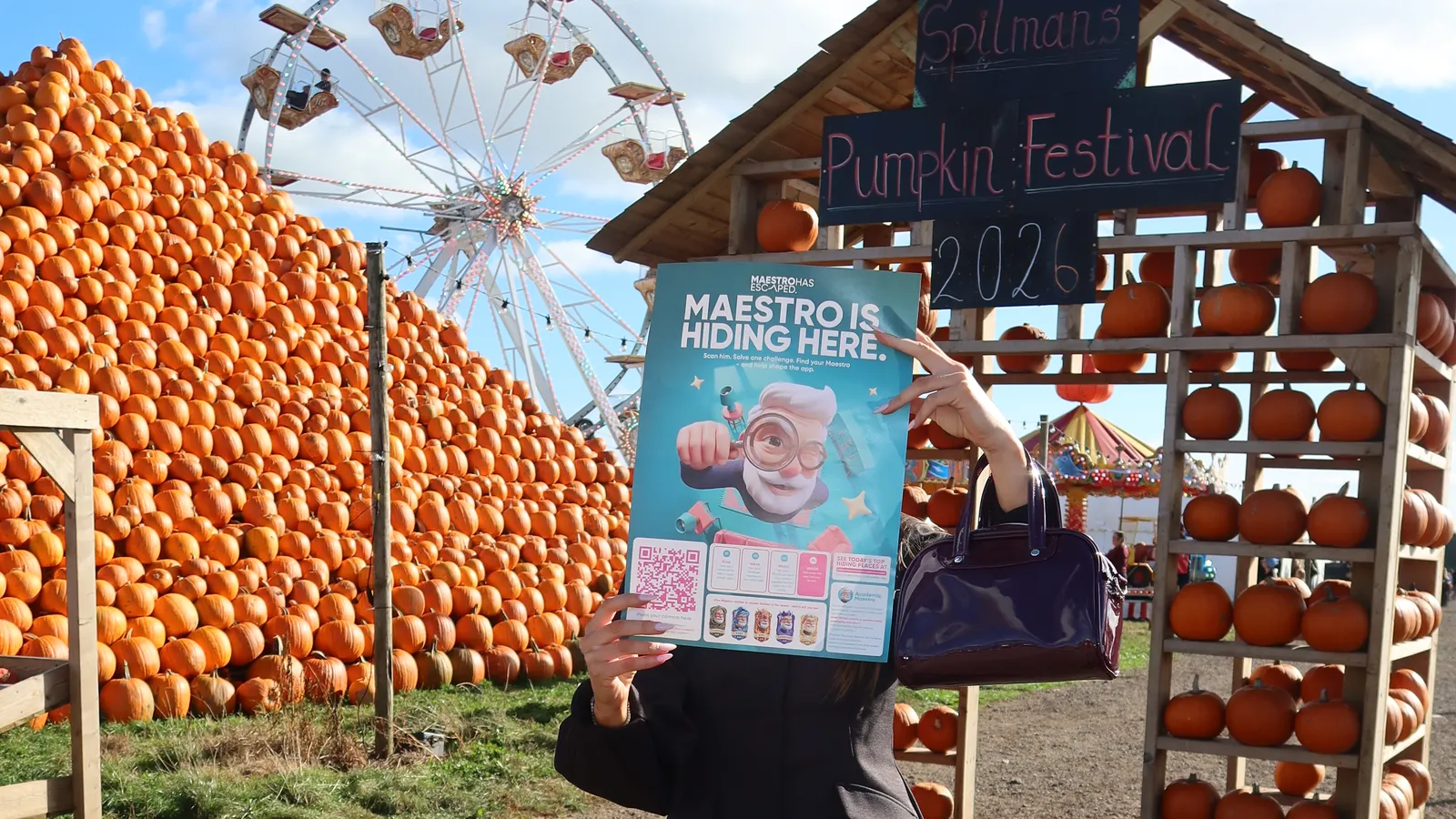
If your family enjoys a short puzzle, Find Maestro offers another way to try one while you are out. From Monday 5th October to Friday 13th November 2026, look for a poster at a participating UK venue and scan its QR code.
Follow the on-screen steps to choose the venue and school year, answer the challenge and reveal your Maestro’s rarity. Young people can also vote on features or designs for the upcoming Maestro learning app. Challenges cover school years from primary through A-Level.
The poster challenge is free. A host venue may charge for admission or its own activities, so check the map, opening arrangements and any costs before travelling. Availability depends on where posters are hosted.
Find a local guide for your family
For specific places to visit, explore our regional guides. Each covers its own local venues and planning details, so you can choose a stop that fits your day.
Questions about learning during half term
Do we need to practise every day? You can choose when a game fits your family. These ideas are optional activities, not a daily homework schedule. If your child has school work or specific learning needs, follow the guidance you have been given.
What if my child does not want to join in? Offer a different topic or leave the idea for another time. They might prefer setting your questions, telling a story aloud or trying a practical task rather than writing.
Does Find Maestro automatically enter a prize draw? No. A parent or guardian aged 18 or over must follow the separate parent page and entry instructions, subject to the campaign terms.
Start with one game your child would choose. A question they want to answer, or a story they want to tell, is enough to begin.
Written by
Academiq Maestro
Academiq Maestro is a UK online tutoring platform. Find Maestro is our free school-year poster challenge for families, running at participating venues from 5th October to 13th November 2026.